Gallery of knives worth looking at closely
Two pictures, what to check in each one, and an honest count of the picture library behind this site.
What a picture of a knife can and cannot tell you
A photograph shows a knife's shape, its finish and how the light sits along the steel. It cannot show how hard the edge is, how the handle feels after an hour of carving, or whether the grind is even from heel to tip. Those are the things worth asking about before buying, and a picture is only a place to start looking.
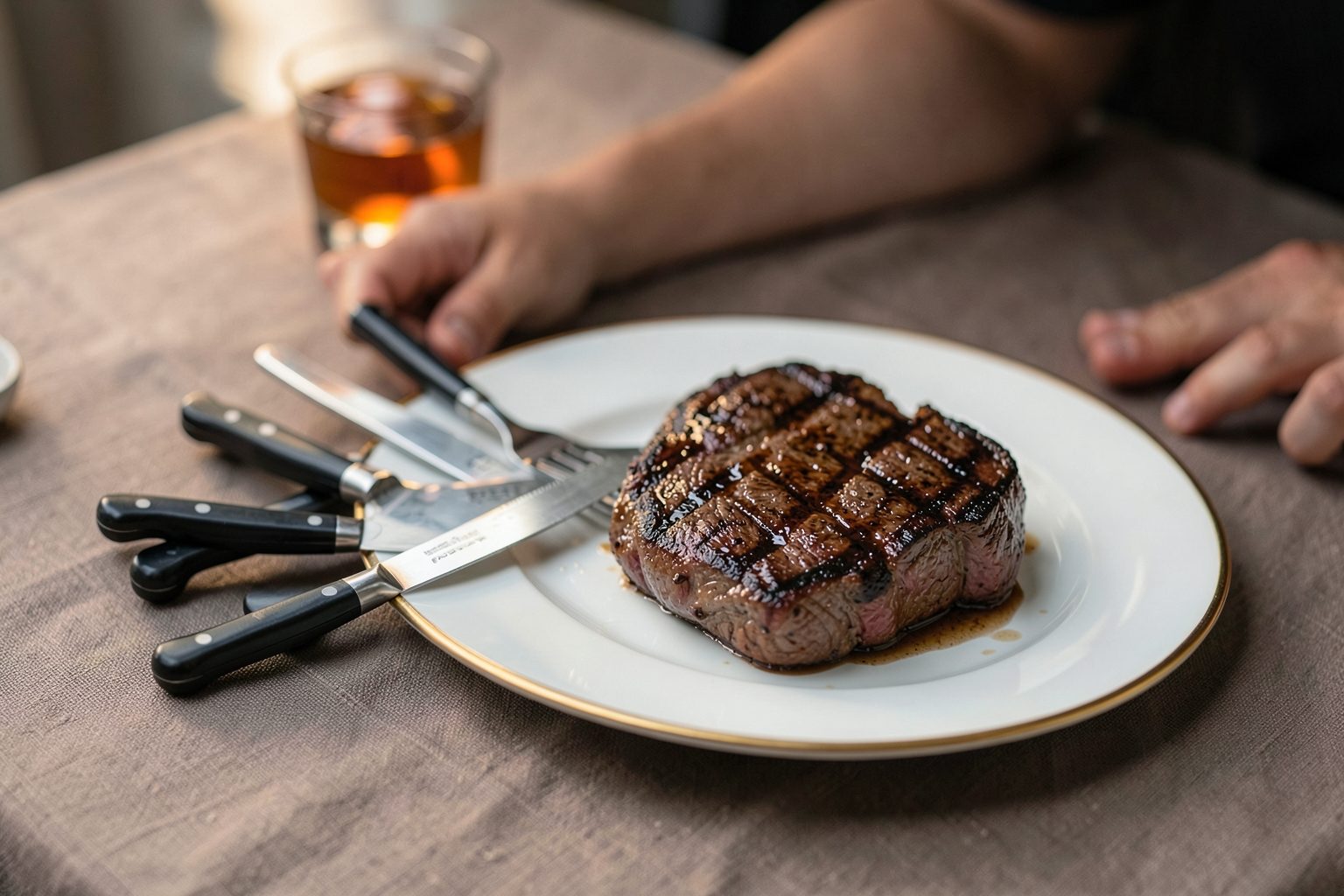
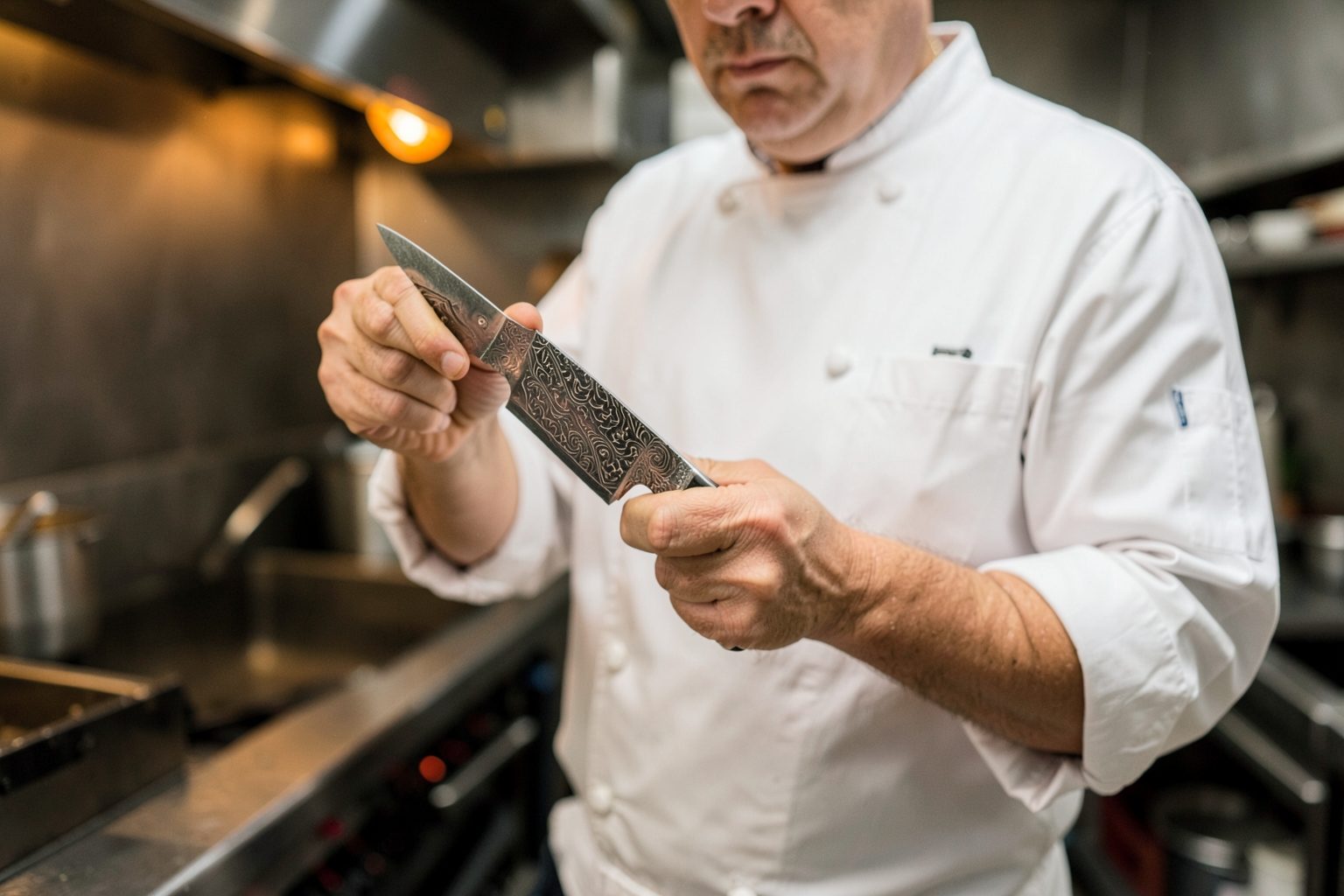
Both pictures on this page are illustrations, not photographs of a particular maker's product, so neither one stands for a blade a reader can order. Each one is here to point at a feature worth checking.
Neither picture is evidence of anyone's workmanship. What follows is what to look for and why it matters at the table.
Steak knives fanned beside a plate, and where to look
What the patterned blade picture shows
The picture of the cook holding a patterned blade up to the light shows a quick check worth knowing: sighting along the edge to see whether it runs straight.
The stages a layered blade passes through
- Stage one
Layers are stacked and welded
Two kinds of steel are stacked, heated and welded into one bar. Where the two steels meet, the pattern begins.
- Stage two
The bar is folded and drawn out
Folding multiplies the layers, and how many there are and how evenly they lie shows in the finished blade. A bar with uneven layers gives a patchy pattern.
- Stage three
The blade is etched
Acid reacts differently with each steel, which brings the pattern up. A pattern that looks printed onto the surface may have been etched on rather than built into the steel.
- Stage four
The edge is ground and hardened
Grinding shapes the edge, and heat treatment decides how well it holds. A blade can look right and still fail at the edge, so the grind and the hardening matter as much as the pattern.
The picture library behind this site
A picture can show a knife's shape and finish, but only handling it shows whether it is any good, so we would rather tell you what to check than ask you to trust a photograph.