Sourcing: how Ladle & Griddle makes its recommendations
Ladle & Griddle is an independent publication on kitchen knives. This page explains where our recommendations come from, what we check before we make one, and what we will not claim.
Where our recommendations start
We start from what makers and sellers state about their own knives: the steel, the edge, the handle and what the set is meant to do. We set those statements side by side and read them against the questions a home cook or a cafe kitchen is likely to bring to a choice. A recommendation is made only when the comparison points one way, and we say so when it does not.
Three checks apply to every maker we mention. The first is whether a claim is specific enough to test, such as a named steel, a stated grind or a handle material. The second is whether a buyer could put the same question to the maker and get a direct answer. The third is whether an outside body measures the thing claimed; where none does, we say that plainly rather than filling the gap with confidence.
Every maker we mention is read against the same three tests, and we mark where a check runs out. A maker's own statements are a reason to look, not evidence of quality. We do not present any recommendation as the result of handling or testing a knife ourselves.
Watching a set cut before choosing one
A steak set is judged on one job, cutting meat cleanly, and a short demonstration shows that job better than a specification sheet does. The clip below is a third-party upload embedded from YouTube; we did not film it and it is not a review of any maker.
The upload is from the channel Haochuyi and shows a 14-piece chef knife set cutting steak. Watch how the blades meet the meat; one demonstration says nothing about how a set holds its edge over years.
Where a set choice usually stalls
The two points that matter most when choosing a set are the steel, and whether the set can go in a dishwasher. Steel decides how often a blade needs honing and how well it tolerates heat and detergent, and a plain stainless set and a layered Damascus set can both be a sound choice for different cooks. A custom order changes the lead time and the price but not the properties of the steel, so ask the maker which steel they use before anything else.
What a workshop picture can and cannot show
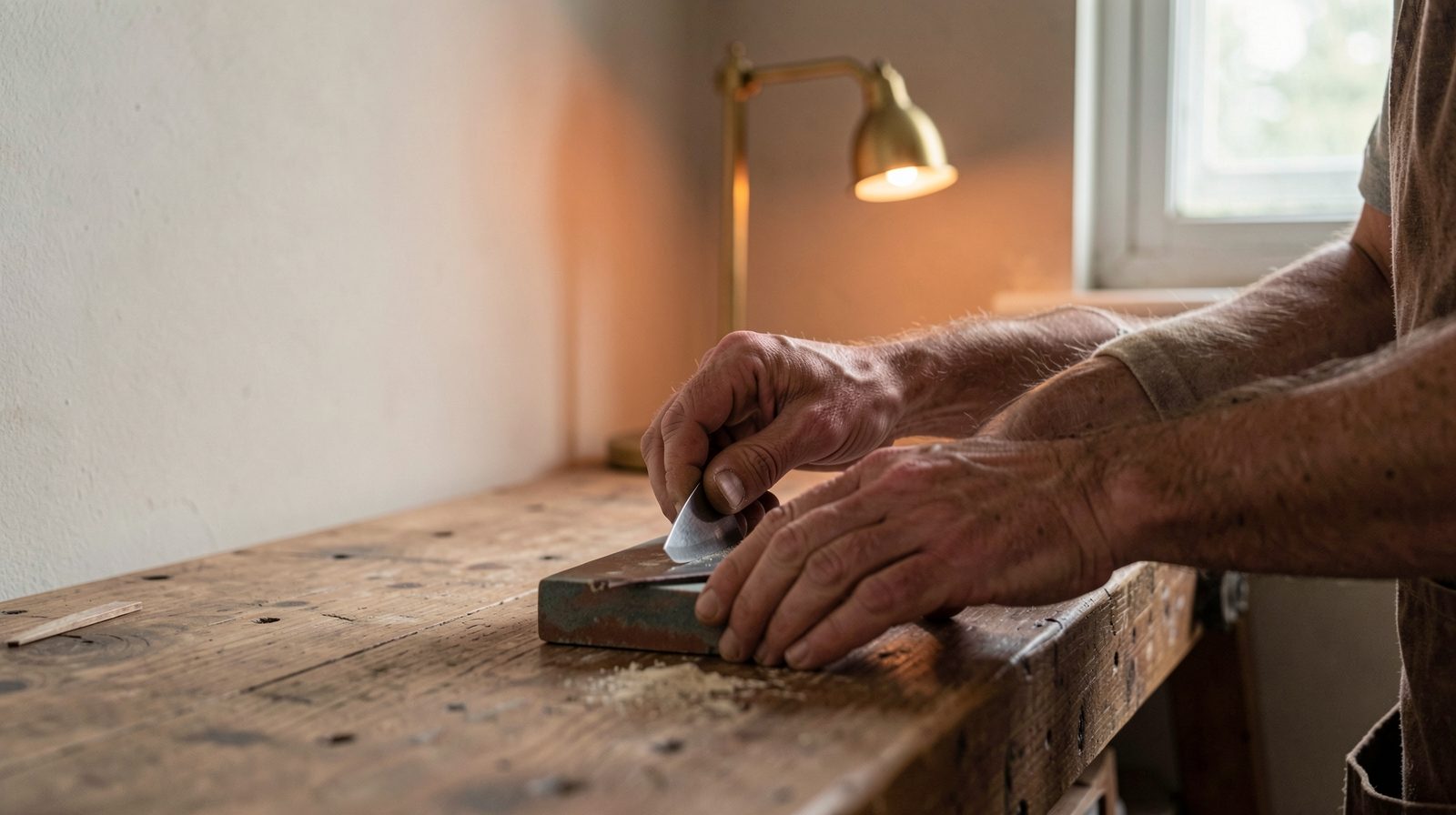
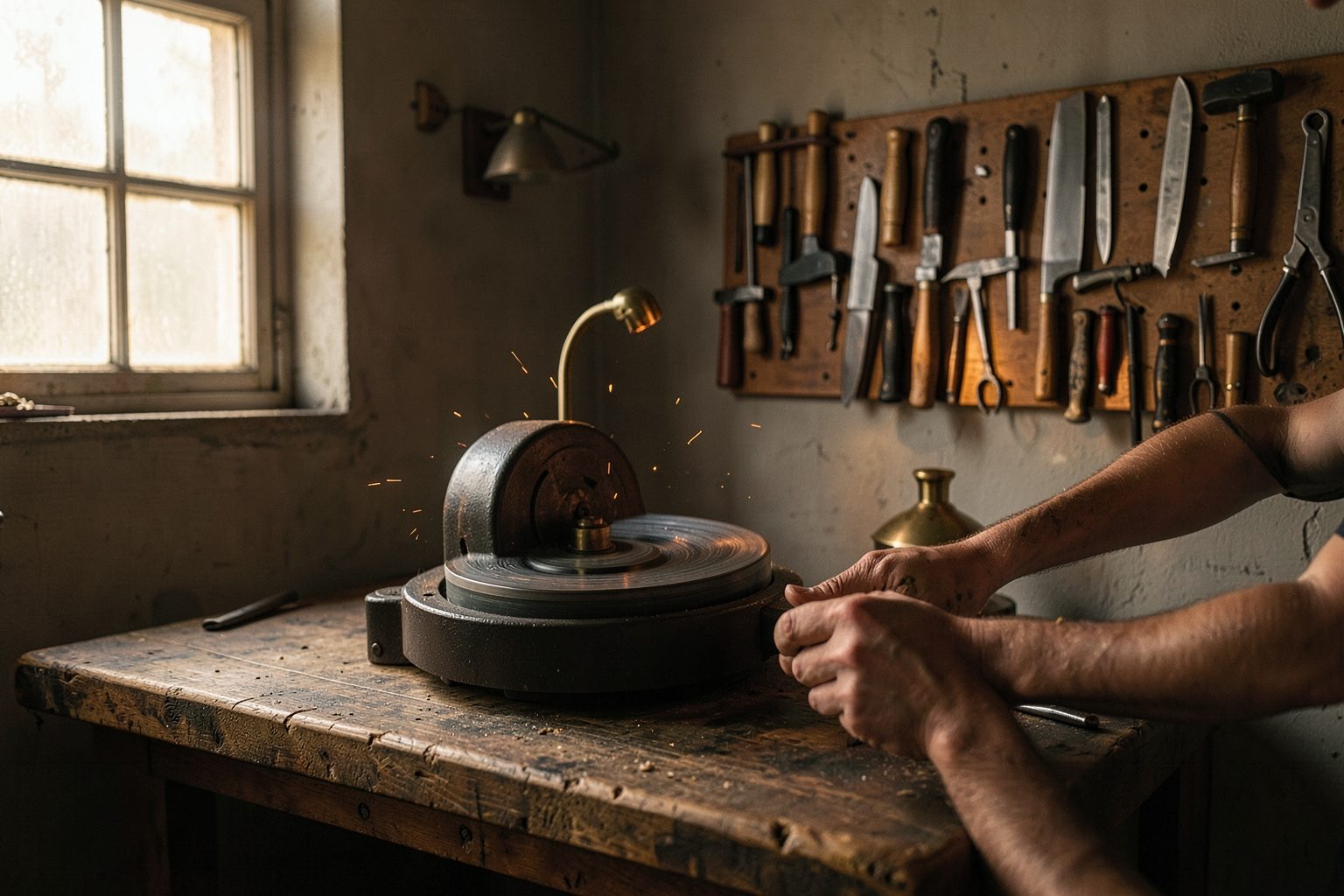
A photograph of a workshop tells a buyer very little about one particular maker, so the pictures on this page are here only to show what to look for. The grinding wheel, the finishing bench and the rack of blades are the places where a maker's claims about edge and finish can be put to them in detail.
Three counts behind this page
Checking a maker against outside sources
When a claim needs a second opinion, these are the two places we look first. Neither is cited as an endorsement of any maker named on this site.
A makers' body and a testing research body
- The Knifemakers' Guild: the professional body for custom knifemakers, founded in 1970, with a magazine and an annual knife show.
- Cutlery & Allied Trades Research Association: the Sheffield research body that tests knife sharpness and durability.
If the question is which set suits your kitchen, the helper on the Ingredients page asks about the cooking first and only then recommends a set.