Ingredients of a knife set, and a helper that picks one
A set is made of a blade steel, a blade build, a handle and a count of pieces. Each one narrows the next, and this page takes them in that order.
What a knife set is made from
Four things decide how a set performs and how much care it needs. Read them in order, because the steel you can live with depends on how the blade is built, and the pieces you need depend on the cutting you do.
- Blade steel: plain stainless or a higher-carbon core. Stainless asks less of the cook. Higher-carbon steel takes and keeps a finer edge, but it rusts sooner if it is left wet.
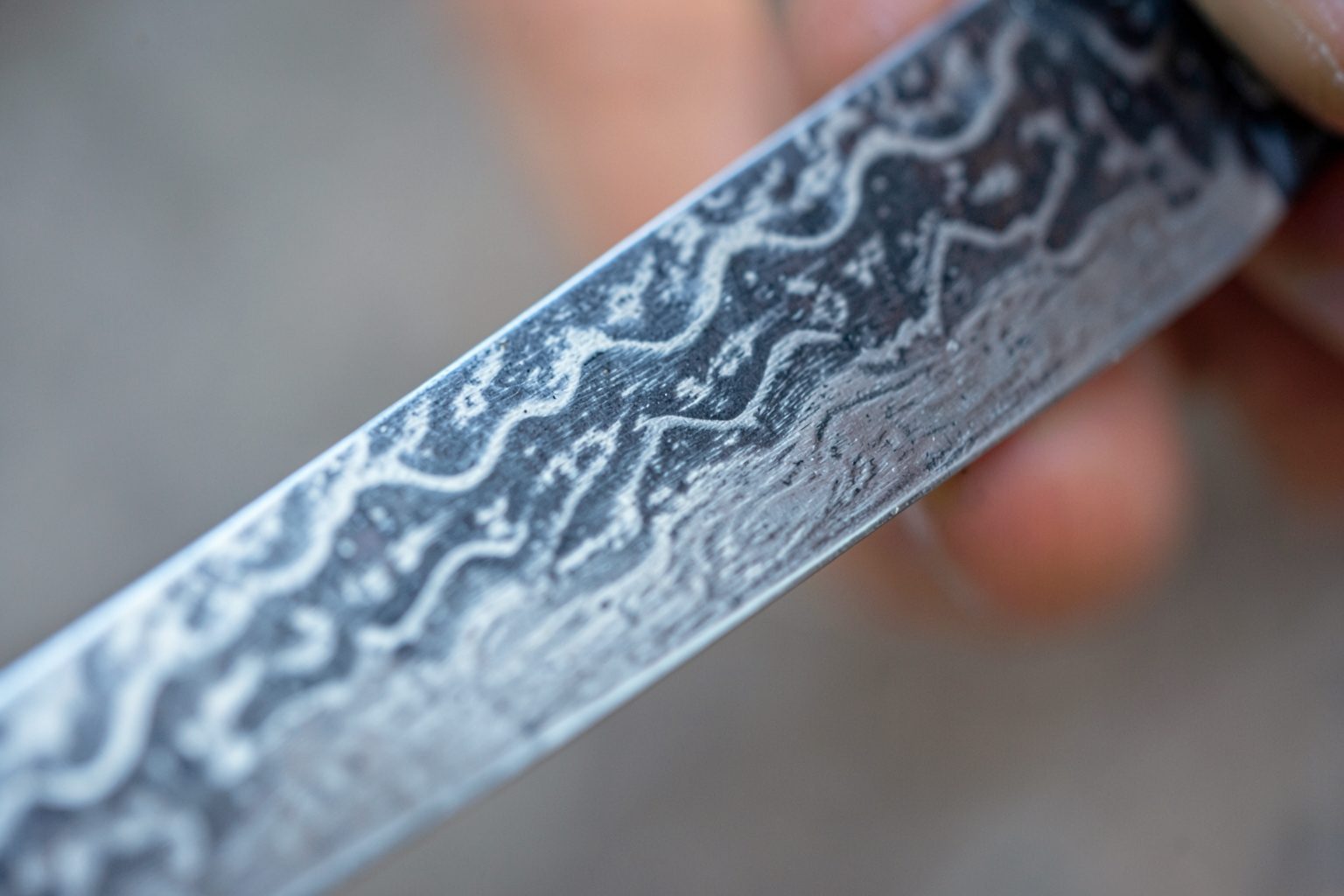
- Blade build: plain or layered. Layered Damascus steel is made from stacked steels, and the pattern shows the layers. The pattern shows how the blade was made; it does not on its own make the edge better.
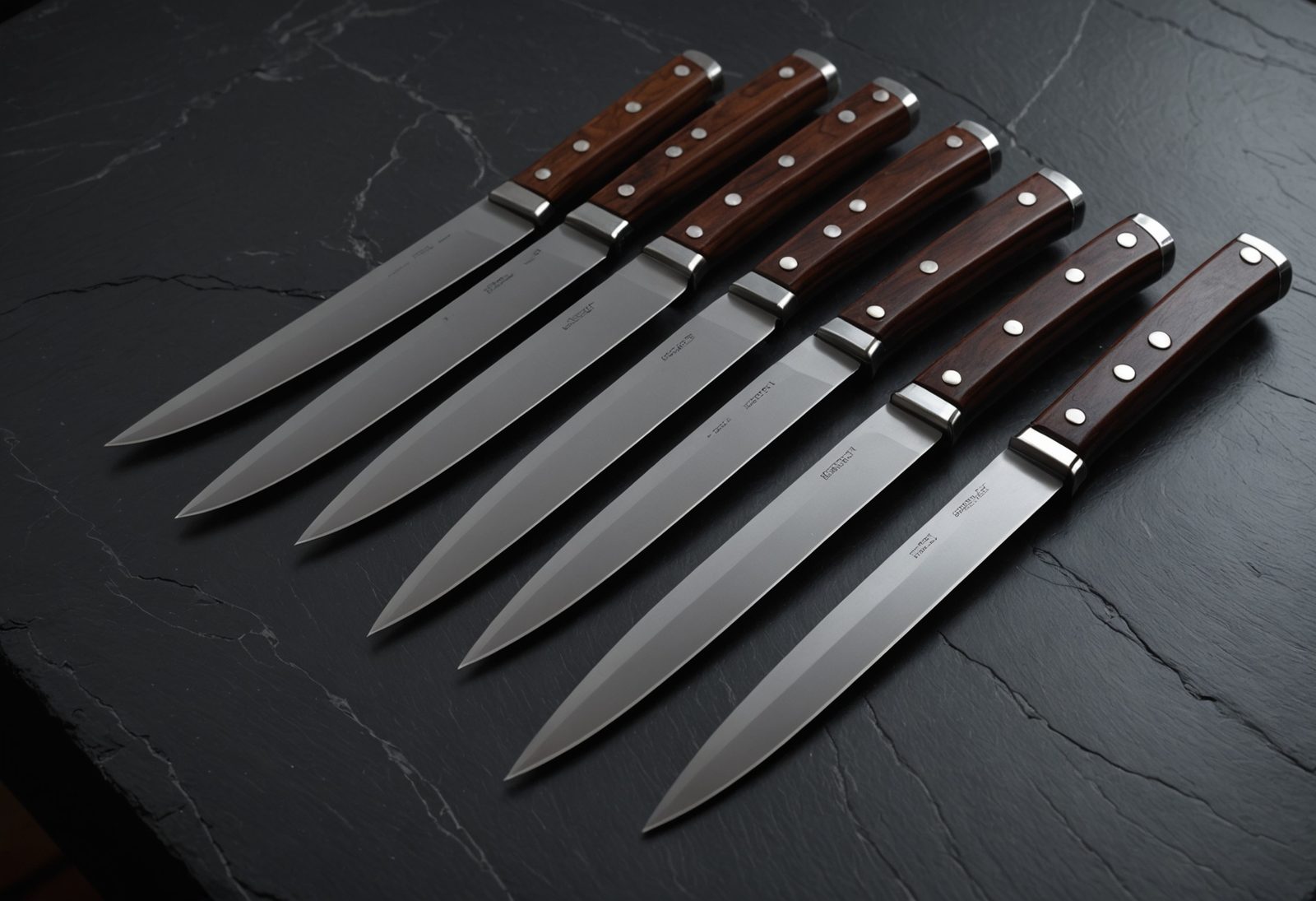
- Handle: wood, composite or resin. The handle decides the balance in the hand and how the knife is cleaned. A wood handle needs drying after washing; a sealed one needs it less.
- Pieces: a chef's knife, a paring knife, a bread knife and steak knives. Count the pieces the cook uses each week, not the ones printed on the box.
The helper further down turns these four into a short list of answers. It cannot see the cook's kitchen, so it asks.
Read the answers in this order
Work through these in order, because each answer builds on the one before it.
- Count the diners at a usual meal. That sets how many steak knives, if any, the set needs.
- Decide what gets cut most: vegetables, cooked meat or both. That decides between a bread knife and steak knives.
- Check whether the knives will go in a dishwasher. If they will, stainless steel is the safer steel.
- Decide whether you will hone and dry the blades by hand. Layered steel needs both, and rewards them.
- Choose between a matched set off the shelf and one made to order. Made to order changes the length, handle and steel.
Work out which set fits your kitchen
Five questions about the table, the cutting, the washing and the set. Answer what you already know. The recommendation and the reasons for it print below the form.
Your recommendation
Assumptions: a general home or cafe kitchen, blades kept sharp with a steel, and no prices. The steel follows the washing and the upkeep, not the pattern alone.
The helper, counted from its own parts
Three points that decide the choice
Three points decide the choice of a set, and each one is about the cook rather than the catalogue.
A layered pattern is not an edge. The core steel and the grind decide how a blade cuts, and the pattern only shows how the blade was made.
A steak knife is for cooked meat at the plate. The chef's knife does the cutting before the food reaches the table, so a set with only steak knives leaves that work undone.
A set counted for a full table can sit in a drawer if the table is usually two. Count the usual meal, not the best one.