Sustainability: why a kept knife outlasts a replaced one
A well-made kitchen knife can stay in use for many years, and most of what decides that is routine rather than the price paid. This page covers the reasons a knife gets replaced, the checks that come first, and the small routine that keeps a set working.
Why a kept knife costs less than a replaced one
A kitchen knife is usually replaced for one of three reasons: the edge has gone dull, the handle has come loose, or the blade has chipped. We treat these as three separate problems. A dull edge is honed or sharpened, a loose handle is repaired, and only a chipped or badly worn blade makes replacement the first thought.
Replacement is the most costly response and the one most often reached for first. Each of the checks on this page takes a few minutes, which is less time than choosing and collecting a new knife. Keeping the old one working is the cheaper decision in nearly every case where the blade itself is still sound.
The case for keeping a knife is simple to state: a knife that is kept working is one fewer blade made, packed and thrown away. We have no trade-wide figures for that and cite none, so the argument rests on the routine itself rather than on a number.

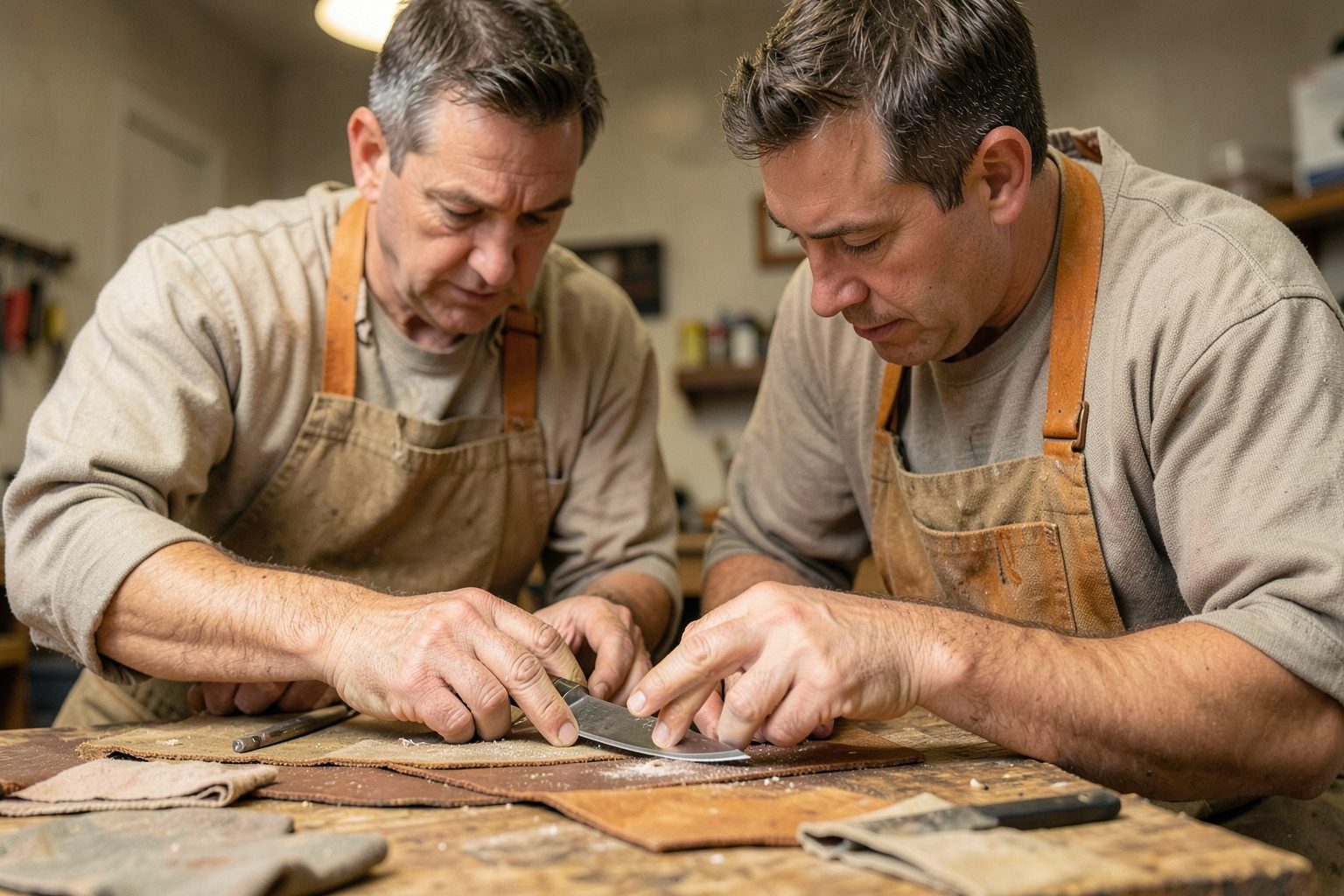
Where a set is usually given up on too early
A set that cuts poorly is usually a set with a neglected edge, not a blade that has worn through. Honing realigns an edge that has rolled over, and sharpening takes off a little steel to bring a worn edge back. Both keep the blade in use, and both are routine work a home cook can learn from a few demonstrations or from a local sharpening service.
Three counts that frame the choice
Four checks before a knife goes in the bin
Before replacing a knife, check four things, in this order. First, whether the edge is only dull or actually chipped, since honing cannot take a chip out. Second, whether the handle is loose at the tang, which is a repair rather than a fault in the steel. Third, whether the blade has lost so much height through repeated sharpening that it no longer suits the job it does. Fourth, whether the knife still matches the cutting it is used for, because a worn knife often just needs a different task.
Most of what makes a knife last happens between uses, not in the shop where it was bought.
That sentence is why this page gives more space to routine than to buying. The four checks are where the routine ends and a decision begins, and only the last of them points toward a new knife.
The three routines that keep a set in use
Wash by hand and dry straight away
Water left on a blade, and in the joint where a handle meets the tang, does more harm than most single cuts. Dry each knife before it goes back on the rack.
Hone before the edge rolls
A honing steel realigns a thin edge that has folded over. It removes almost no metal, which makes it the routine that delays sharpening the longest.
Look at the handle and the blade tip
A loose handle is a repair, not a replacement, and it is far easier to fix before it starts to move. Check the tip for chips while the knife is still in your hand.
For the steps in order, with the reason for each, read the storage and serving page. If the question is which set to keep in the first place, the helper on the Ingredients page asks about the cooking before it recommends anything.